Needle In A Haystack Beginner Guide
Learn the dig, bag, cow sale and workshop loop for Little Field Studios’ Steam App 5321400, with a practical first-session route and clear upgrade choices.
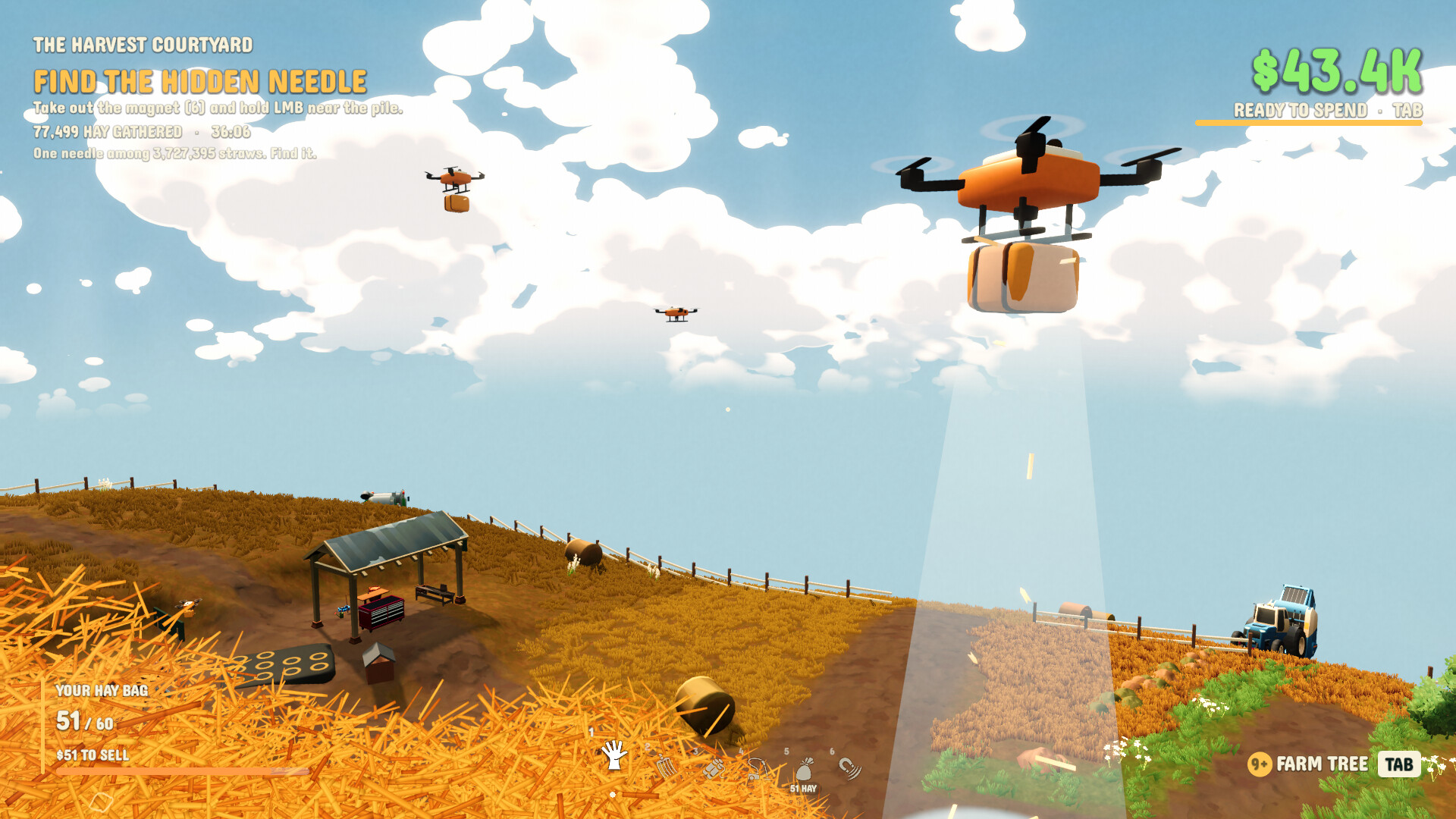
Begin A Game About Needle In A Haystack by pulling hay into your bag, selling it at the cow and spending the money in the workshop. Repeat that loop while clearing a part of the pile you can recognize. Your final objective is the hidden needle, but your early decisions are about keeping the search moving: a readable work area, a manageable trip to sell and an upgrade that addresses your current bottleneck.
View reference image
On this page
Begin A Game About Needle In A Haystack by pulling hay into your bag, selling it at the cow and spending the money in the workshop. Repeat that loop while clearing a part of the pile you can recognize. Your final objective is the hidden needle, but your early decisions are about keeping the search moving: a readable work area, a manageable trip to sell and an upgrade that addresses your current bottleneck.
This guide covers Steam App 5321400 by Little Field Studios. The official store and API checked October 18, 2026 show a released, single-player, first-person game with an October 16 release date. Several similarly named needle games exist, including a different multiplayer title. Do not import their player counts, tools or walkthroughs into this one. The route below combines the verified store loop with our suggested first-session routine.
Start with the hand-gathering loop
The official description says that pulling hay by hand puts each strand into your bag. Start by learning that action and watching the current bag display. The purpose of the opening cycle is to understand what counts as collected hay and how the game communicates your carrying state. This page does not assign an unverified keyboard binding or claim a starting capacity.
Pick a recognizable edge of the pile as your working area. This is our organization advice, not a hidden mechanic or a required starting point. An edge makes it easier to see the difference between the surface you already cleared and the hay still in front of you. If you move around the whole stack immediately, it becomes harder to remember what changed.
Before leaving the pile, look back at the place you were working. Choose one landmark you can find again after selling. It can be the shape of the cleared face or its position relative to the surrounding yard. You do not need a complicated map. You need a simple answer to where you will resume the next collection cycle.
Sell at the cow and confirm the result
The official store explains that carrying a full bag to the cow lets you sell hay for money. Learn that trip early. Follow the current interaction prompt at the cow and check the displayed result. A visual encounter with the cow and a completed sale are different states, so use the live bag and money displays to confirm what happened.
After the sale, return to the area you selected instead of starting a new cut elsewhere. That makes each cycle part of one visible search. A repeated loop is easier to evaluate: you can notice whether gathering, carrying capacity or the trip itself feels like the main interruption. Randomly switching work areas adds uncertainty without necessarily bringing you closer to the needle.
Do not assume a fixed sale value per strand or a cash bonus from a guide for another game. Our checked source establishes the sale mechanic but does not provide a complete economy table. Use the number currently shown in your session for a purchase decision, and distinguish that observation from a permanent rule about the game.
Read the workshop before choosing an upgrade
The official store names bigger bags, faster hands and new tools as workshop purchases. Those choices affect different parts of your cycle. More carrying space addresses repeated returns to sell. Faster hands addresses the time spent gathering manually. A new tool changes how you remove hay. None should be called the mandatory first purchase without checking your current experience and the live prices.
Before spending, describe the problem in one sentence. If you fill your bag quickly and keep interrupting a clear work area to walk back, capacity is worth investigating. If gathering feels slow while your bag has room, hand speed may be more relevant. These are ways to compare the advertised upgrade roles; they are not a tested optimal order or a promise of a specific return on investment.
Look at what the current workshop offers, what you can afford and what remains after the purchase. Buy one meaningful change before buying several unrelated upgrades. Then repeat the same work-and-sale cycle. You will have a better chance of understanding the effect than if you change everything and cannot tell which purchase helped.
Add tools when their role is clear
The official description names a pitchfork, dynamite and a vacuum. The pitchfork removes a large clump per swing. Dynamite blasts a crater in the pile. The vacuum removes hay continuously but can overheat. These are distinct behaviors, so evaluate them by the job you need rather than by treating the list as a fixed progression order.
For example, a broad opening and a careful inspection of the remaining surface are different tasks. A large-looking hole is not proof that you checked every exposed area for the needle. Likewise, continuous collection does not mean the vacuum can operate without interruption, because overheating is explicitly part of the store description.
Use the tools and upgrades guide when you are ready to compare those roles. It provides an observation routine for capacity, hand speed and each named tool, with no invented prices, damage-style statistics or unsupported upgrade multipliers. The official media on this site lets you compare the presentation with your own interface.
Keep the search connected to the economy
Selling and upgrading support the needle search, but it is easy to let them become a separate goal. Before each new cycle, decide which piece of the pile you intend to expose. After selling, return to that piece and continue. This connects money earned to a visible reduction of the area you still need to inspect.
Do not read a hay counter as a verified distance to the needle. Our checked official text says that one needle is somewhere in the pile, but it does not establish a fixed location, a guaranteed depth or a published probability distribution. A large amount collected is evidence of work done, not evidence that the next strand must contain the objective.
If you notice an unusual object, slow down enough to inspect what the game is showing before moving on. This is a search habit rather than a claim about the needle’s exact size, color or interaction trigger. The finding the needle guide explains how to organize a systematic search while leaving those unverified details open.
Recover from a confusing session
If you lose your place, choose a visible edge of the area already cleared and resume from there. Do not restart the entire game simply because a work area feels messy. This guide has not verified reset behavior or whether every kind of progress persists, so a reset should not be presented as a harmless search shortcut.
If an upgrade does not seem to help, check which stage is still slow. A larger bag may reduce trips without making each pull faster. Faster hands may fill the bag sooner and make selling feel more frequent. A tool may change the shape of the cleared area. Those differences can make a working upgrade feel confusing if you expected every stage to speed up at once.
If a sale does not appear to complete, recheck the current prompt and displayed bag state. Avoid guessing at a hidden cooldown or a required item from another title. Observe the live state first, then report a reproducible issue with the exact game identity and the steps you took if the problem continues.
Finish the opening session with a useful next step
A productive first session leaves you understanding the whole loop: collect, carry, sell, choose a workshop change and return to a known area. It does not require finding the needle immediately or owning every tool. Once the loop makes sense, your next goal can be a deliberate tool comparison or a more organized section of the search.
Keep the official Steam page as the source for release status and the core mechanics. Store media is a demonstration, not a promise that your account starts with the equipment shown. Our recommendations are designed to help you make readable decisions from the game in front of you, without relying on fixed needle coordinates, invented economy tables or instructions for a different haystack game.
Step-by-step guide
- Learn gathering and bag state
Gather hay from an area you can recognize and watch the bag display. Learn the current gathering prompt and the point at which carrying space interrupts your work.
- Confirm a sale at the cow
Visit the cow and confirm the displayed sale and bag state. Use the workshop only after identifying whether gathering speed or carrying trips currently interrupts the search.
- Return to the same search area
Return to the same recognizable edge after selling. Inspect the exposed area before widening the search, so a sale trip does not make you lose track of the cleared section.
Quick reference
Task checks
| Situation | Check |
|---|---|
| Gathering | Learn the hay-removal prompt and watch the bag display. |
| Selling | Use the cow and confirm the sale outcome. |
| Workshop | Choose the upgrade that addresses the current interruption. |
| Returning | Resume from the same recognizable cleared edge. |
Video evidence
Watch creator walkthroughs alongside this guide. Check the recording date before following requirements that may have changed.
Official gameplay preview: hay removal
Shows tool use and the bag display. Equipment shown is not a promised starting loadout.
FAQ
Which game and source does this guide cover?
This guide covers the exact Little Field Studios game linked in the sources, checked October 18, 2026. Each gameplay source has its own date.
What if the live interface differs?
Follow current game prompts and check the official listing. Send a correction with the game identity, date and observed difference to linming7277@gmail.com.
Sources
Recheck these links whenever the game version, release status, or strategy changes.
- Official A Game About Needle In A Haystack listing Identity and features checked October 18, 2026.
- Official full trailer manifest Exact official App 5321400 trailer, separate from the directly playable store preview clips.